
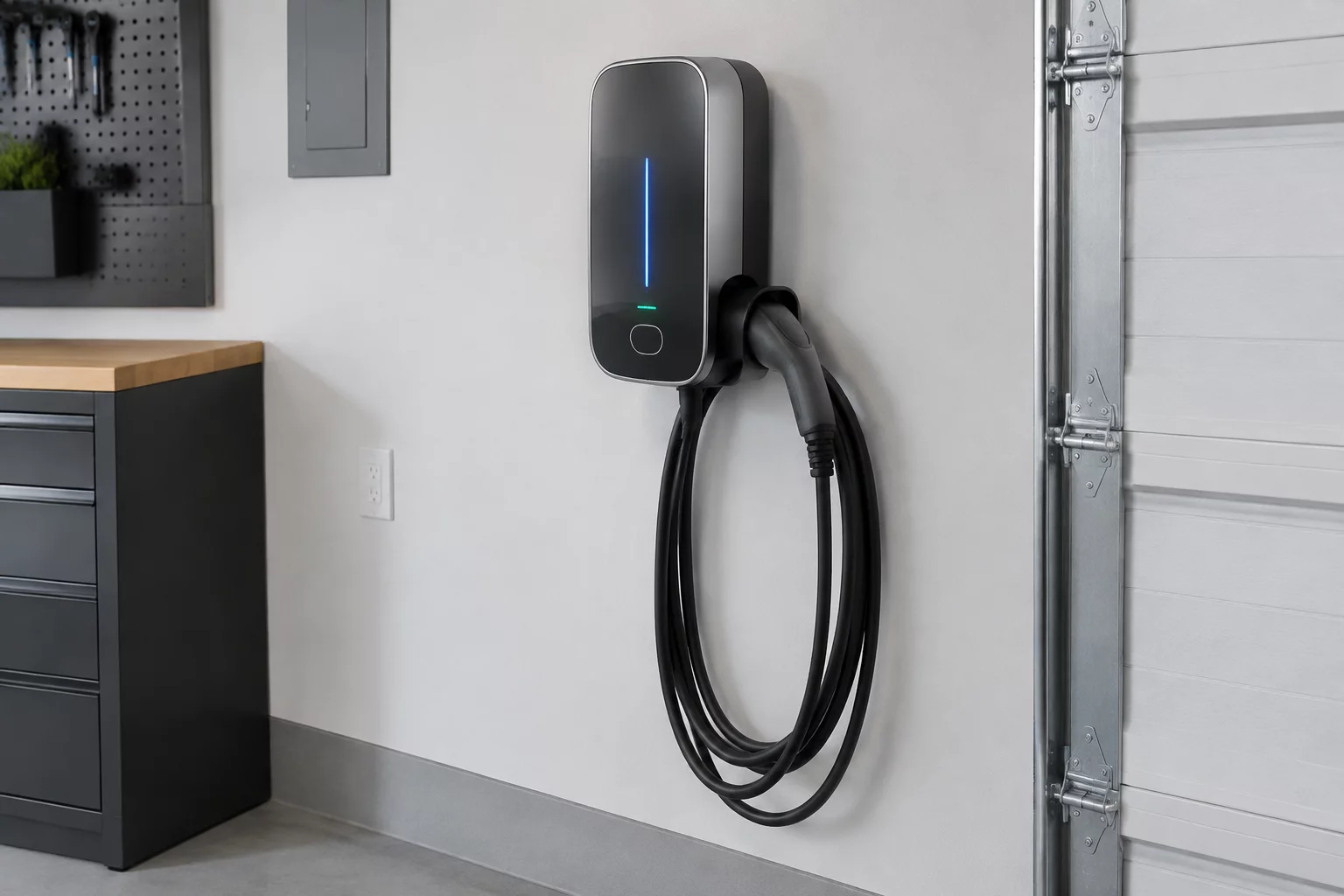
Residential & Commercial EV Charging Architecture
A reliable electric vehicle charger demands dedicated high-amperage circuitry, thermal load calculations, and precise breaker matching to prevent panel strain and nuisance trips.
Dedicated 240V Branch Circuit
Custom heavy-gauge copper wiring runs directly from your main electrical panel to the charging location, isolating high-draw loads from delicate household circuits.
Hardwired or NEMA 14-50 Setup
Options for both heavy-duty industrial receptacle installations and weatherproof hardwired stations delivering continuous charging rates up to 48 or 80 amps.
GFCI & Overcurrent Protection
Installation of specialized 40A to 60A double-pole breakers equipped with required ground-fault protection to prevent electrical shocks in damp garage conditions.
Load Calculation & Balancing
Comprehensive audit of main panel demand capacity to ensure simultaneous operation of HVAC, kitchen appliances, and rapid vehicle charging without tripping.
Permit Acquisition & Code Compliance
Full administrative support managing municipal electrical permits, jurisdictional inspections, and utility company notifications for clean, legal sign-offs.
Smart Charger Network Sync
Station configuration for Wi-Fi enabled load management, scheduled off-peak charging times, solar integration, and automated utility rebate tracking.
Engineering High-Current Infrastructure
Charging an electric vehicle at home with a standard 120-volt wall outlet supplies barely 3 to 5 miles of range per hour, testing the patience of modern commuters. Transitioning to a high-output 240-volt Level 2 charging station increases replenishment speeds up to 40 miles of range per hour, drawing continuous currents between 32 and 48 amperes for multiple uninterrupted hours.
Such sustained continuous electrical draw subjects your wiring, busbars, and circuit breakers to severe thermal stress. Our certified electricians evaluate your existing panel capacity, run premium THHN copper conductors inside protective metallic or PVC conduit, install continuous-duty rated disconnects, and ensure whole-system grounding meets all National Electrical Code specifications.
The Continuous Load Rule
Under NEC Article 625, electric vehicle charging is categorized as a continuous electrical load. The circuit breaker and wire gauge must be rated for 125% of the charger's maximum output (e.g., a 48A charger requires a dedicated 60A breaker and #6 AWG copper conductors).
Key Facts & Technical Criteria
-
1
Amperage Sizing Supports 32A, 40A, 48A, or 80A hardware configurations based on panel capacity.
-
2
Conductor Specification 100% solid or stranded copper wiring sized to avoid voltage drop across extended conduit runs.
-
3
Universal Compatibility Certified for universal J1772, NACS, and all major vehicle manufacturing standards.
-
4
Weatherproof Enclosures NEMA 3R or NEMA 4X rated conduits and disconnects for rain, ice, and dust resistance.
Four-Phase EV Installation Workflow
From service entrance load calculations to final circuit commissioning, every milestone is systematically verified.
Load Evaluation
Calculation of total residential electrical draw, service drop capacity, and busbar allowance to determine maximum safe charging amperage.
Conduit & Cable Routing
Selection of optimal routing paths across attics, crawlspaces, or surface conduits using heavy-gauge copper wiring rated for continuous output.
Station Mounting & Wiring
Secure mounting of the charging unit, torqued terminal connections to manufacturer specs, and integration of a dedicated double-pole breaker.
Testing & Commissioning
Ground loop impedance testing, live voltage drop verification under load, Wi-Fi pairing, and municipal inspection certification.
Frequently Asked Questions
Clear answers on electrical panel requirements, charging speeds, and equipment selection.
Related Electrical Services
Explore other core engineering and modernization offerings.
Request Quote & Inspection
Complete the dispatch form for code assessment, estimates, and project scheduling.