Hazard Remediation & Modern Copper Modernization
Houses wired between 1965 and 1973 carry single-strand aluminum conductors that expand under heat, oxidize rapidly, and create severe fire hazards at switches, receptacles, and junction boxes.
Thermal Creep Elimination
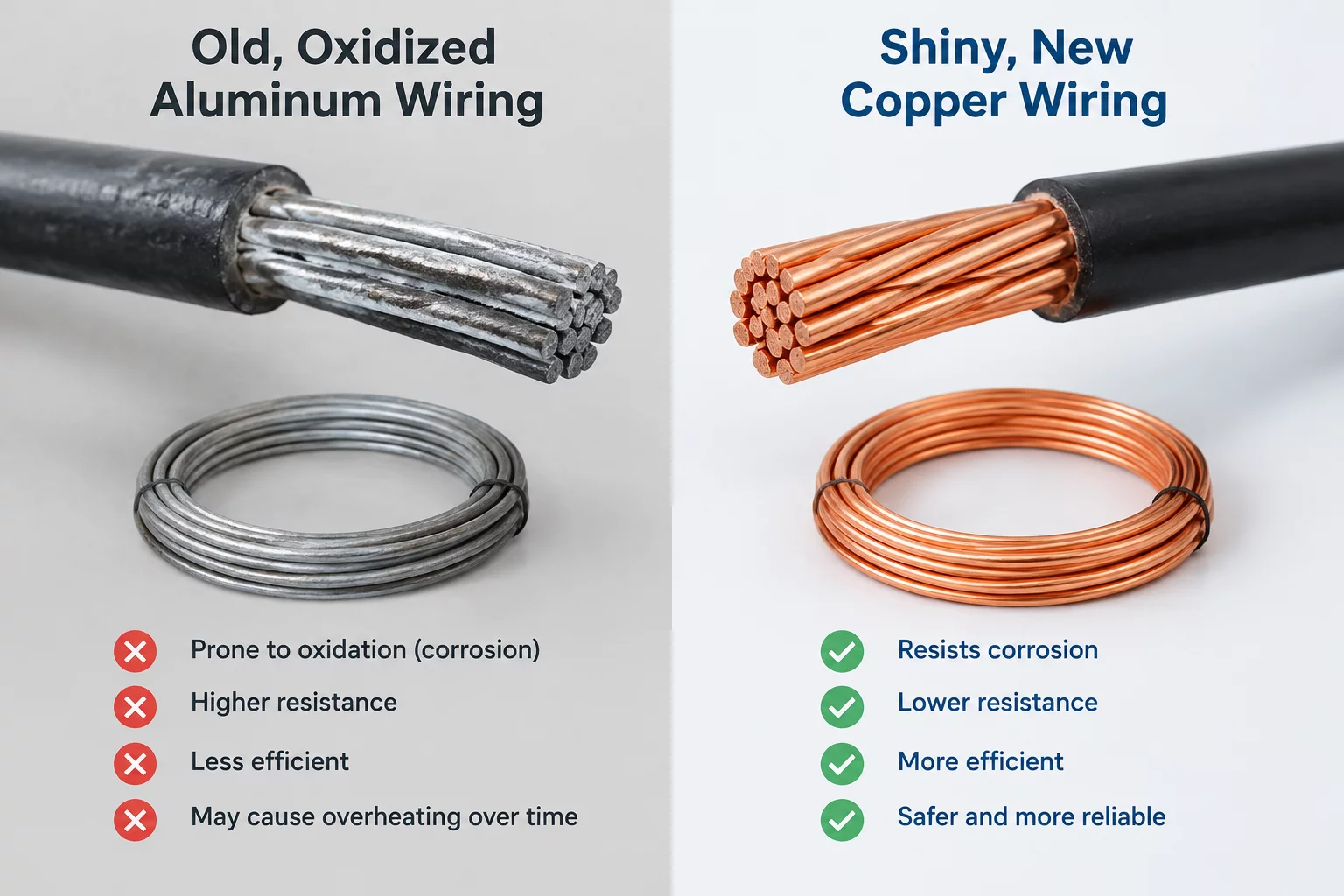
Aluminum expands at a substantially higher rate than copper, loosening terminal screws over repeated heat cycles and creating micro-gaps prone to arcing.
Copalum & AlMiGo Pigtailing
When whole-house wall opening is impractical, cold-weld compression sleeves permanently bond copper tails to existing aluminum leads without high-resistance connections.
Oxidation Barrier Protection
Untreated exposed aluminum wires quickly form an insulating oxide film that overheats when carrying current. Our replacements use oxidation-inhibiting compounds and copper conductors.
Branch Circuit Home Runs
Complete rewiring of entire dedicated branch lines for kitchen appliances, bathrooms, living quarters, and air handler systems using pure copper NM-B cable.
Device Replacement to CO/ALR
Replacing standard receptacles and switches with certified specification-grade devices, eradicating hazardous galvanic corrosion between incompatible metals.
Insurance & Permit Certification
Providing full documentation, permit sign-offs, and compliance letters required by homeowners insurance providers to eliminate policy surcharges or denial of coverage.
Why Aluminum Wiring Demands Immediate Remediation
During the residential building boom from 1965 to 1973, soaring copper prices prompted builders to install single-strand aluminum branch circuits. The U.S. Consumer Product Safety Commission later established that homes with aluminum branch wiring are 55 times more likely to experience fire hazards at connection points compared to copper-wired homes.
Aluminum wire possesses distinct physical properties: greater electrical resistance, significant thermal expansion, and vulnerability to galvanic oxidation. When connected to standard outlets, screws loosen over years of normal use, generating intense localized heat that chars receptacle enclosures and wall framing before breakers ever trip.
Essential Safety Warning
Never twist copper and aluminum wires together with standard wire nuts. This practice accelerates galvanic corrosion and creates severe ignition points inside junction boxes.
Key Facts & Technical Criteria
-
1
Thermal Expansion Coefficient Aluminum expands 38% more than copper under standard household electric current loads.
-
2
CPSC 55x Risk Differential Government testing verifies connection points with aluminum are 55 times more fire prone.
-
3
Insurance Underwriting Rules Most carriers require certified remediation letters before approving home coverage renewals.
-
4
100% Solid Copper Durability New copper wiring guarantees 50+ years of maintenance-free, safe conductivity.
Four-Phase Rewiring & Remediation Process
A systematic approach to assessing, isolating, replacing, and certifying your home's electrical distribution.
Full Diagnostic Audit
Thermal imaging and terminal inspections identify overheating junction boxes, loose splices, and oxidized aluminum runs throughout the property.
Remediation Strategy
We map the optimal route: full copper homerun replacement or high-pressure cold-weld pigtailing to minimize drywall disruptions.
Precision Replacement
Electricians pull new solid copper conductors and install modern tamper-resistant devices with torque-calibrated connections.
Load Testing & Sign-off
Circuits undergo continuity and resistance testing, followed by municipal inspector sign-off and complete insurance certification.
Frequently Asked Questions
Clear answers regarding aluminum wiring risks, cost factors, and replacement options.
Related Electrical Services
Explore other core engineering and modernization offerings.
Request Quote & Inspection
Complete the dispatch form for code assessment, estimates, and project scheduling.