Article Header Background
Electrical Safety 6 min read

Top Causes of Breakers Tripping

James Miller • October 1, 2026 • Technical Advisory
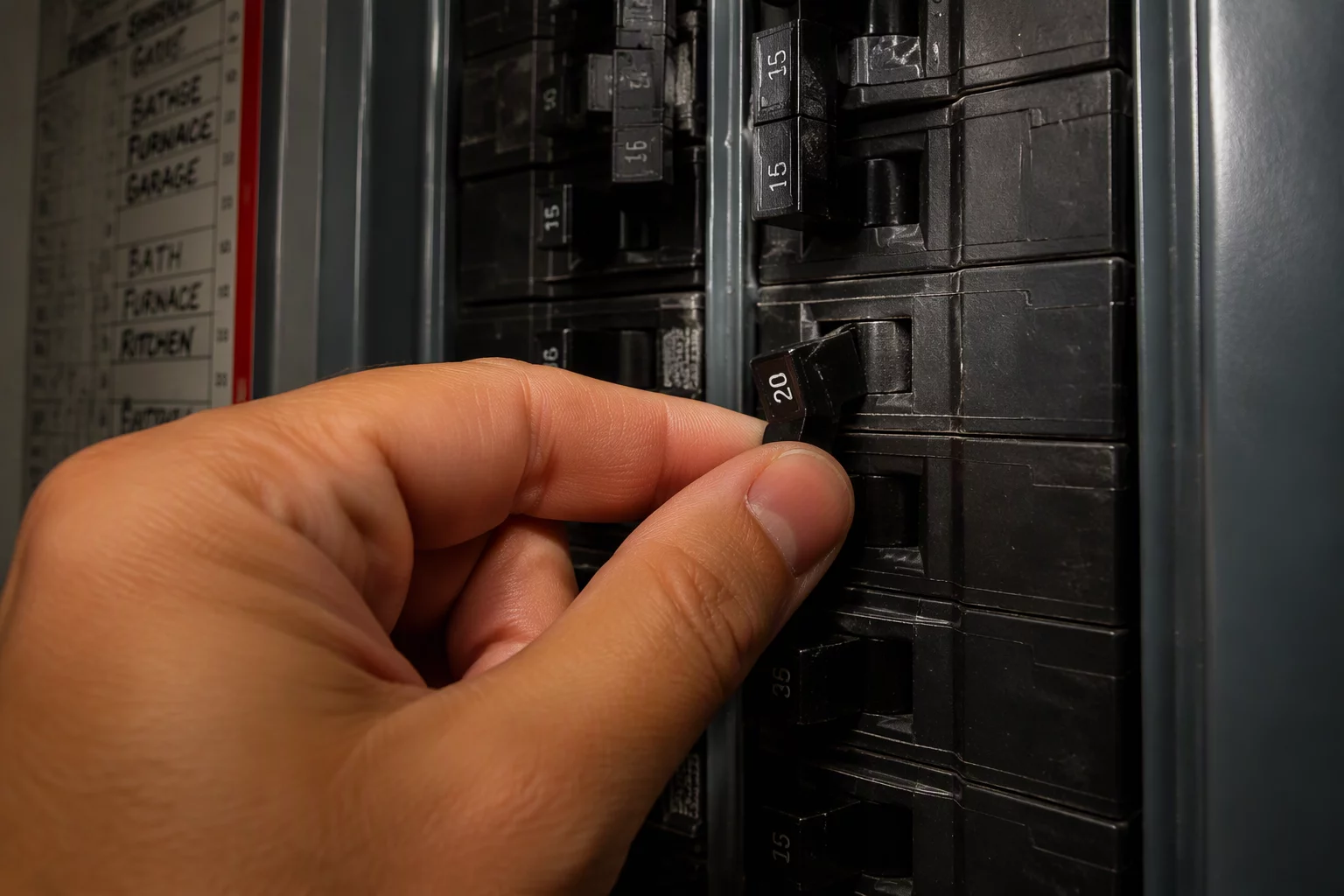
Residential circuit breaker panel switch being operated safely

A standard residential distribution panel activating thermal-magnetic shutoff mechanisms during an overcurrent event.

How Circuit Protection Mechanism Operates

Every residential circuit breaker acts as an automatic safety barrier between utility electrical service and indoor appliances. When electrical current surpasses the wire gauge capacity or encounters an unplanned connection path, internal bimetallic strips bend under heat or magnetic coils energize instantly to sever the electrical flow. This mechanical interruption prevents insulation from melting and stops fire hazards before conductors can heat structural framing.

Frequent shutoffs usually indicate that electrical demands exceed the designed branch capability, or that a dangerous insulation failure has developed inside wall cavities. Modern homes contain an array of high-power kitchen equipment, climate units, and smart devices that draw continuous current near the safety thresholds of older distribution boards. Identifying the root trigger of a tripped switch protects your home from cumulative thermal wear and costly equipment burnout.

Primary Tripping Triggers and Diagnostic Benchmarks

Compare standard operating conditions with technical failure signatures across modern residential electrical installations.

Fault Mechanism Detection Threshold Recommended Resolution
Circuit Overload > 80% continuous rated current (16A on 20A branch) Redistribute heavy appliances or add dedicated branch lines
Short Circuit Fault Instantaneous surge spike (> 10x rated amperage) Inspect cord degradation and replace damaged receptacles
Ground Fault Event Current leakage to ground conductor (> 4–6 mA GFCI) Seal outdoor enclosures and repair damp zone wiring
Arc Fault Discharge High-frequency waveform signature (AFDD detection) Tighten junction lugs and replace cracked conductor insulation

Systematic Inspection and Problem Isolation

When a breaker snaps into its center neutral position, resist the urge to immediately force it back into the ON position. Repeatedly energizing a line that harbors an active short circuit causes destructive electrical arcing inside the panel and damages connected electronics. Instead, locate the specific breaker label, observe any colored indicator flags, and disconnect all plug-in loads along that circuit branch before attempting a single manual reset.

"A tripped circuit breaker is an active safety intervention, not an inconvenience. Repeatedly resetting a tripped switch without identifying the fault source accelerates thermal degradation across the entire panel assembly."

— James Miller, Master Electrician

Essential Diagnostic Steps for Property Owners

  • Unplug high-draw portable heaters, espresso machines, and power equipment before evaluating panel switches.
  • Inspect breaker housing faceplates for noticeable heat accumulation, discoloration, or faint buzzing sounds.
  • Perform monthly push-button self-tests on integrated GFCI and AFDD modules to ensure mechanical responsiveness.
  • Commission comprehensive infrared panel diagnostics if a breaker trips randomly with zero connected plug loads.

Persistent tripping issues that survive branch load reduction typically stem from fatigued internal mechanical springs inside aging breakers or degraded insulation along hidden cable runs. Professional panel assessments isolate loose bus bar connections, evaluate feeder cable capacities, and restore balanced phase distribution across all residential sub-circuits.

Certified Electrical Safety

Experiencing Chronic Circuit Breaker Tripping?

Our licensed electricians perform comprehensive load calculations, isolate concealed line faults, and upgrade obsolete panel assemblies with modern AFDD and RCD protection.

Related Electrical Safety Articles

Explore practical guides on wiring modernizations, property inspections, and domestic electrical planning.

Electrical Tips for Home Renovation
Buying an Older House Electrical Checklist
Why Replace Aluminum Wiring

Discussion & Community Insights

Verified client comments and safety advisory queries.

Marcus Vance avatar

Marcus Vance

Verified Client

2026-09-28 • Panel Troubleshooting

Very helpful! We had constant breaker trips whenever the dishwasher and kettle ran concurrently. Dividing the circuits resolved the whole issue.

Sarah Jenkins avatar

Sarah Jenkins

Verified Homeowner

2026-09-29

I had this exact issue. Turns out an old space heater was pulling nearly 15 amps on a shared living room lighting circuit.

David Reynolds avatar

David Reynolds

Verified Client

2026-09-29 • AFDD Safety

Great explanation. The difference between standard overloads and ground faults was clearly laid out.

Elena Rostova avatar

Elena Rostova

Verified Client

2026-09-30 • Diagnostics

Thanks for the tips. Understanding why not to force a tripped breaker switch back on was an eye-opener.

Michael Chang avatar

Michael Chang

Verified Client

2026-09-30 • Inspection

Will check my panel. Our garage subpanel is over twenty years old and trips sporadically whenever power tools start up.

Leave a Comment