
The Hidden Risks of Branch-Circuit Aluminum Wiring
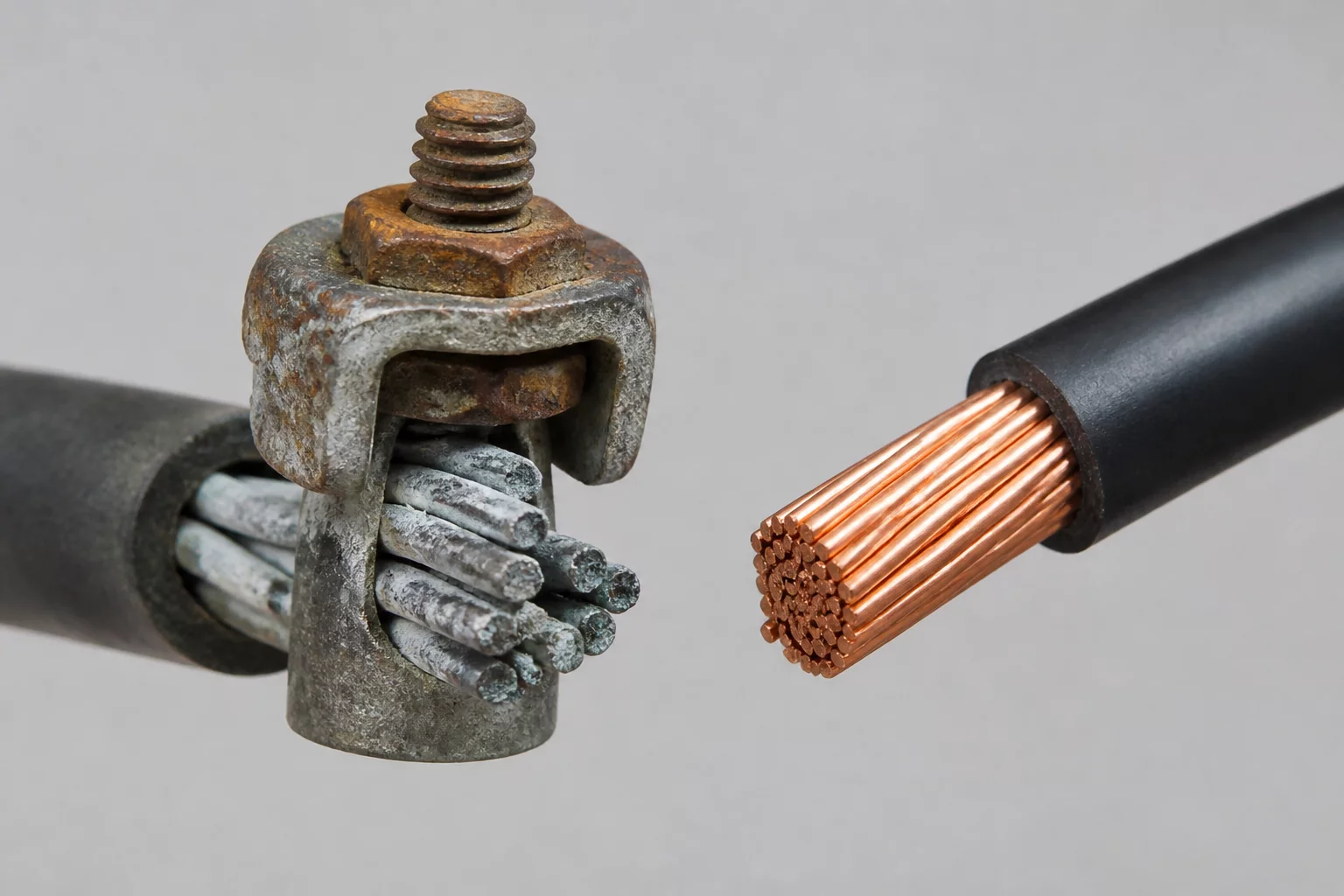
Between 1965 and the mid-1970s, soaring copper prices prompted builders across North America to install single-strand aluminum wiring in residential branch circuits. While aluminum remains a viable conductor for heavy transmission lines and main utility service cables when properly engineered, its performance inside residential branch circuits revealed severe systemic hazards. Standard switches, outlets, and twist-on wire connectors designed for copper quickly deteriorated when wired with aluminum, causing hidden overheating behind drywall and inside ceiling boxes.
Research by the U.S. Consumer Product Safety Commission (CPSC) established that homes constructed with untreated aluminum wiring during this era are approximately 55 times more likely to experience fire-hazard conditions at outlet connections than homes wired with copper. Over decades of daily thermal cycling from household loads, aluminum expands significantly more than copper, gradually working itself loose from terminal screws and creating high-resistance electrical junctions that can ignite surrounding wood framing.